Thursday, 15 December 2016

Details of first 2017 stamp issues now revealed

Royal Mail's Philatelic Bulletin has now confirmed that the 2017 programme will be revealed in its January issue - as my December issue has only just arrived this may be between any time between January 1 - 31!

Details of the first issue have already been published, and as soon as I have time I will produce a set of pages on our website with the usual details.  Meanwhile here is an outline of what we know.

17 January - Ancient Britain
Headlined 'Biography of Britain' in the Bulletin this may be the first of many sets charting Britain's history from early times through the Dark Ages to those which have been partly covered already.  This new set of 8 has se-tenant pairs in each of 1st class, £1.05, £1.33 and £1.52 which at least means we get international postcard rate stamps from the outset.  The subjects, in the same value order are:
  • Battersea Shield, London c350-50 BC
  • Skara Brae Village, Orkney c3100-2500 BC
  • Star Carr Headdress, Yorkshire, c 9000 BC
  • Maiden Castle Hill Fort, Dorset, c400 BC
  • Avebury Stone Circle, Wiltshire, c2500 BC
  • Drumbest Horns, County Antrim, c300 BC
  • Grime's Graves, Norfolk, c2500 BC
  • Mold Cape, Flintshire, c1900-1600 BC
6 February - 65th Anniversary of the Accession of Queen Elizabeth II
Listed in the Bulletin's 'issues and withdrawals calendar' is a new large Machin with a face value of
£5 in Sapphire Blue.  Post Office branches no longer use stamps with such a high face value, which begs the question as to why a more useful stamp wasn't issued.  I guess it is because they didn't want a set of 6 or miniature sheet but did want to get more than pennies for this event.  It's described as a definitive, but although in the Machin definitive design, it won't be widely used as a definitive so that categorisation is dubious
      However, if you think that is bad, be thankful that you don't collect the stamps of the British Virgin Islands.  Their similar commemoration consists of two stamps priced at $10 and $90.  If those dollars traded at 20 to the pound it would as 'reasonable' as the British issue.  But the BVI stamps are priced in United States dollars - making this set one of the most expensive and least justifiable ever at pennies under £80 or €95 - see, there's always somebody worse off than you!  More on this on the very useful Commonwealth Stamps Opinion.

15 February - Post and Go Mail Heritage: Mail by Rail
We showed and described these stamps earlier when the Postal Museum announced their version.

On the same day, coinciding with Spring Stampex, the Windsor Castle stamps will be issued, consisting of
  • 3 stamps each 1st class and £1.52 - just one of the 1st class is marked Europa
  • Miniature sheet of 2 x 1st class, 2 x £1.33
  • ditto - Limited Edition Stampex Exhibition MS
  • Press Sheet of 16 miniature sheets (does anybody buy these now?)
  • Retail Booklet
  • Prestige Stamp Book
  • Presentation Pack
  • Stamp Cards
  • Medal Cover

Monday, 12 December 2016

A confusion of islands at Stampex

On the subject of errors - see post below - here's one which has only recently reached us.  This customer writes:
At the Autumn Stampex I bought a Collector Strip from the Jersey Machine, with the
Battle of the Somme overprint. I checked the printing and all seemed fine. It was not until Monday that I was able to sort out my purchases but on so doing I became confused as to what I was looking at. Clearly, I had made a mistake and bought two of one item and none of another.
Indeed, an error had been made on my part, brought about by my not having my wits about me. I had not, as I thought, made the wrong purchases but I hadn't spotted - until Monday morning, that is - that the Jersey Machine had issued a Guernsey Strip but with the Jersey datastring.

Had I been more alert, of course, I would have bought a few and then informed the Staff of the wrong roll in the machine. But I wasn't so I didn't. But I shall be more alert in future.

I have, from time to time, looked on ebay to see if anyone is selling these Errors but either they aren't or I've missed them
.


The moral of the story - if I needed to remind you - is to look closely at everything you buy, as soon as you can. Had our reporter bought more he could have sold them on eBay or to me for our regular customers, and could have paid for his trip from Yorkshire to London several times over!


Saturday, 10 December 2016

Software error causes Post and Go printing to be inverted.

I don't normally blog at the weekend but thought I should share with you a Post and Go error that I received on a letter this morning.


At first sight it seems easy to explain - the reel of stamps was mounted in the machine the wrong way - but that actually wouldn't produce this invert unless the whole reel of stamps was wound the wrong way, because the feed would present the back of the strip to the printer.

The enclosed letter explained: A software fault in the NCR Self-Service Kiosk, which occurred bizarrely only at Sydenham BO, caused the stamps to be to be inverted on a normally-mounted reel of stamps.   On a collectors set of 6, the 1st class stamp was printed first, followed by the 1st Large, Euro 20/World 10, etc.  Apparently despite this the stamps are still usable as printed, so the Branch Manager was told to continue to use the machine (presumably because of the Christmas post pressures), and it took 8 engineer visits (yes, eight) to put this right.

My correspondent, it seems, asked if other stamps could also be loaded into the machine just as I would have - I would have wanted an example of each.  [Apologies for poor editing of this paragraph earlier, it's almost impossible to do on a pad as there is no mobile interface and the web-editor version is clunky beyond belief - Google used to provide an App, but no longer supports it!]

And so the MA16 Poppy, MA14 Machin, and Ladybirds are also currently available on eBay with this error - which is much more than 'an example of each'.


UPDATE 12 December
I'm reminded that when a roll of stamps is replaced in a PandG or SSK machine, either due to a fault in the machine or when new designs are issued, the old roll is often dropped into a storage area within the machine - I've seen that myself and I and my customers have benefited from it.   If the 'part roll' - let's say they are Machins - has sufficient stamps on it to make it worthwhile using it it may be reloaded when the temporary (say Winter) stamps are removed.  If there are too few to use they ought to be destroyed of course.  

Back in 2014 new rates of Europe 60g and Worldwide 60g were introduced when rates changed. Many of these were able to be produced on stamps which were thought to be long out of use.  We reported the following from around the country: All three water life, all three farm animals, union flag, Machin, spring flowers, robin, and lastly Birds 2, 3 and 4.  Obviously these were not all from the same branch but several different branches had some very old stock, and boosted their turnover as a result.  Most branches only had two designs active, but could produce others if asked.

This is unlikely to happen again, not in the near future.  But errors can occur - albeit not many on NCR SSK machines.  But all of us have the opportunity to pop in to SSK branches and buy a stamp - if it turns out there is an error, then buy more.  Of course if you not are a regular visitor you may not be able to persuade the staff to add something different, but if you cultivate your sources by being a regular visitor and finding friendly staff, then you can achieve more - a fact that applies to ordinary post office branches and buying booklets or other stamps as well.  

And don't begrudge others their good fortune and the work they put into sourcing different stamps.  Without these people I wouldn't have anywhere near as much to report!

UPDATE 15 December
We've had a very interesting comment from Paul who is a software designer with NCR - see 15 December comment.  Paul writes:

"I'm the software designer and lead developer at NCR for the Post Office self-service machines. My first inclination is usually to assume that our software is at fault until proven otherwise, but in this case it seems quite unlikely. It is possible to generate this kind of reversal if the media have been removed from the roll and fed into the printer the wrong way, which I suppose could happen with a left-over roll."

My response to this, which doesn't actually explain how the problem occurred:

"Invert the image and the stamps will be correct, and the printing will be in the correct order, ie the first stamp to be dispensed in a Collector's Strip is the 1st class (stamp number 43 on the Machin). The second stamp is the 1st Large - stamp number 44, and so on to the Worldwide 100g, stamp number 48.

So the printing is in the right order on upright stamps, but the print is inverted appearing at the right of the stamp instead of the left. The printing on each stamp *must* have been printed with the datsstring printed first, and the top line of '1st class' printed last.
"

As an aid to understanding what has happened here is the Machin strip up the right way - see right.  The top stamp is number 43, the next is 44, then 45, and so on.


Thursday, 8 December 2016

The Postal Museum celebrates Mail by Rail with Post and Go inscription

http://postalmuseum.org/discover/attractions/


Edited from Press Release
LONDON, 8 December 2016 – The Postal Museum is pleased to announce that from Wednesday 15 February 2017 it will be selling the Royal Mail Heritage: Mail by Rail Post and Go set with The Postal Museum inscription. The set of 6 stamps will be available on 1st class values only.

The stamps can be purchased from the A001 Post and Go machine located at Freeling House, The Postal Museum’s present offices.

They will be available from 10.00-17.00 on the first day of issue and from 09.00-17.00 Monday to Friday after that. Please note that the Search Room is currently closed and only the foyer will be accessible.

The current Hibernating Animals Post and Go set on 1st and 2nd class stamps will finish on Friday 30 December 2016.

In addition to Mail by Rail, The Postal Museum will continue to offer the Union Flag, Mail Coach and 1st and 2nd class Machin stamps.   (Museum WebShop)

Mail by Rail presentation packs, first day covers and a postcard set will be available to pre-order online from 1 February.

From this PM picture (click on it to see larger images) we can see that the illustrations on Royal Mail's Mail by Rail Post and Go Faststamps (which will be available at Stampex, from Post Office self-service kiosks and probably from Royal Mail Enquiry Office machines) are:

Travelling Post Office: bag exchange
A specially designed apparatus enabled leather pouches containing mail bags to be exchanged with a moving Travelling Post Office (TPO). Pouches were hung from track-side standards or train-side ‘traductors’ to be caught by nets. The first  successful mail-bag exchange was in 1838.

Post Office (London) Railway
Also known as the Post Office Underground Railway, this subterranean line connected sorting offices with London railway termini. Operating between 1927 and 2003, it was renamed Mail Rail in 1987. Up to 40,000 mail bags were carried daily between Liverpool Street and Paddington over 6.5 miles (10.5km).

Night Mail: poster
Three years after the GPO Film Unit’s Night Mail film was released, in 1939 graphic artist Pat Keely designed an iconic poster that captured the essence of TPO trains. In excess of 70 were in operation at this time, transporting, sorting and despatching 27 million letters every day and night.

Travelling Post Office: loading
‘Euston Station: Loading the Travelling Post Office’ is a 1948 poster designed by artist Grace Golden. Main-line railway termini such as Euston station in London became hives of activity as dozens of mail vans crowded in to have their post unloaded for despatch across the country via the TPOs.

Travelling Post Office: sorting
A key feature of Travelling Post Offices was that mail was sorted while on the move. The Up Special TPO from Carlisle was the longest TPO in the world and could have 50 highly skilled postal staff working on it, while the smallest of mail trains could have just a single sorter.

Travelling Post Office: on the move
The first bespoke Travelling Post Office carried mail in 1838. By the 1930s there were 130 TPOs operating both night and day, with four exclusively functioning as mail trains. Day services ceased following the Second World War and the final TPO services ran on 9 January 2004.

See more on Mail by Rail here.  


Wednesday, 7 December 2016

Surprise new M16L printing for £2.25 stamp

I suppose we shouldn't be surprised: the airmail tariff (Worldwide letters 20-100g) was not increased this year so perhaps it is not so surprising that a reprint would be needed at some time.  What is more surprising is that it occurred while the equivalent Christmas stamps were on sale, so perhaps not enough of those were printed, or customers wanted the definitive.

Printed on 21/11/16 this has made a remarkably quick appearance and we now have it for sale on our webshop, the Norvic catalogue number is 3225.6


The question that this raises, is whether any of the other airmail rate stamps will also need reprints?  Royal Mail produced them to cover the Large Letter rates of £2.45, £3.15 and £3.30 and the 20-100g Europe rate of £1.52.  The latter ought to be a good candidate even if most mailpieces needing these stamps are sent from Post Office branches have Horizon labels or Open Value Post and Go stamps from self service kiosks.

Another new printing just received is the 2nd class Large counter sheet, printed on 12/10/16.  Date blocks of these are also available from our webshop.

Monday, 5 December 2016

Royal Mail 2017 stamp programme - first Europa stamp for years!

I'm sorry to disappoint all of you who expect that this post will show the programme, but it doesn't!

In years gone by (not so long ago) Royal Mail distributed the stamp calendar at Autumn Stampex but no more.  Although they announce the programme to the stamp trade at that event, with details of the first six months, all information is now on strict embargo.  And even if it wasn't, the last list I saw showed at least two 'To Be Announced' entries with not even the month known!

I've been told that the programme will not be announced until January.  All I can do is repeat what was printed in the October edition of the Philatelic Bulletin (and reprinted in some magazines):
- Ancient Britain
- Royal Mail Heritage - Mail by Rail
- Racehorse Legends
- Windsor Castle
- Post and Go
I expect Mail by Rail to be a Post and Go issue, and Windsor Castle to be similar to Buckingham Palace - so 6 sheet stamps, 4 in a miniature sheet and an expensive prestige stamp book.  I also expect there to be a 10 x 1st class set in March or April just before the postage rates increase.

To find out more about new issues readers should look at the websites of first day cover producers.  Restrictions by Royal Mail Stamps and Collectables mean that cover producers and others can often promote their own products 10 weeks before the issue date.

However I can't now publish pictures of any of the Royal Mail products (stamps, FDCs, etc - even if I was using a special postmark on my Royal Mail FDCs) "until the stamp images are released by us via our website or in mailings to regular order customers".

Typically Royal Mail will undertake PR on the day of issue with a “buy them now” notice.

So I'm sorry, I'm not going back to first day cover production just so that I can provide the pictures and other details at the earliest possible time.  And you can't rely on the philatelic press either because they have never had the '10 week' rule even though they have long printing lead times.

The Royal Mail Philatelic Bulletin costs £18.95 (UK and Europe) or £24.95 (rest of world): you can ask for a sample copy but I leave it to you to decide whether it is value for money, given that some of the details of new issues have, in the past, been omitted or inaccurate.

UPDATE 7 DECEMBER
I've been told that there will be a PR announcement for 1 January about (all or one of) next year's new issues, but I have no details.  This may mean that - as last year - the first you read about some of the new stamps will be in the national press on that day, if you can be bothered to go and get a newspaper!   Again, look at the websites of majors, like The Telegraph.

2nd update: if you follow my twitter account you can see the Windsor Castle stamps which will be issued on 15 February https://www.twitter.com/Ian_norvic/status/806612388539748357 
Thanks also to Mia who pointed out that one of the 1st class stamps carries the PostEurop Europa logo (top right on the FDC).

Manchester Large Flat postmarking machine in use this year

We recently received a C3 envelope folded and taped to be almost square, cancelled with Manchester's 'Large Flat' postmarking machine.  


We first saw this a few years ago on a bulk mailing but have seen little reported about it since, and no extension to other areas.  The place and date portion is partly printed on adhesive tape, so it doesn't show, but there is no doubt that this is Manchester Mail Centre in November 2016.  Rather than any seasonal message it has the Postcode slogan.

Look out for unusual postmarks on your Christmas mail, and let us know what you find.  We'll be reporting more on slogan postmarks very soon.

New Machin Parcel Labels from Post Office SSKs

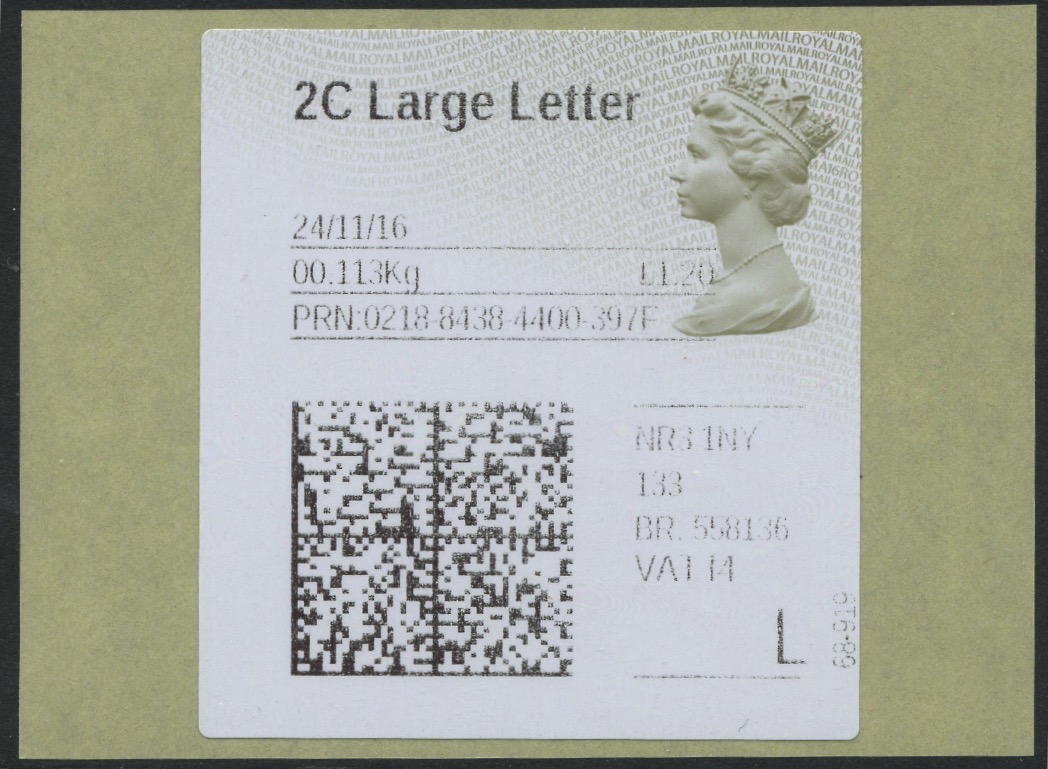
Readers will recall the changes to the Horizon labels (right) to incorporate the 2D bar code (reported in October 2015).  The purpose of this was to increase Royal Mail's ability to track parcels through their system even when the customer had not paid for a tracked service. 

This change had already been introduced for big users and contract customers, and Royal Mail was keen to extend it to packets and parcels sent from Post Office counters.  However that still left stamped mail, and mail sent using Open Value labels from the Self-Service Kiosks (SSK) in Post Office branches - senders were increasingly encouraged to use SSKs instead of the counter which could then be used more for foreign money and insurance transactions.

Although not unexpected, this change seems to have been unannounced.  I understand from the British Postmark Society that trials started in September and I know that the system is still being rolled out across the branch network.  The labels are dispensed from a third printer added to the machines - I doubt that the rolls can be loaded in positions 1 and 2 - but time will tell.  The new label is very similar to the new-style horizon label above:


As with other Post and Go stamps these have a year code, located to the right of the Queen's head:


Unfortunately the Norwich SSK machines are producing a very poor quality print, but the similarity is obvious, even if the details are repositioned.   From the top, the date, weight and value (£1.20 in this case).  At lower right, the destination postcode, house number, branch code and VAT code.  I presume that the country is shown if the destination is overseas, and the PO Box number in place of the house number.

At one time one could find a comprehensive list of PO branches which had Wincor and then NCR machines, identified by Branch Code.  Unfortunately this is difficult to maintain without input from a great many people and a lot of work: as the network has expanded it has become more difficult and each relocation (eg from a Crown Office) brings a new branch code.  Norwich Castle Mall Crown Office was 019136; the new office in WHSmith's St Stephen's Street branch is 558136) 136 being the area code).

However, if you have a smart-phone with a QR-code reader or bar-code reader, you may be able to interpret the data included in the 2D barcode.   This one produced the data string:
JGB 422 2A021884384400397F558136000011
3100120241116122              133                                NR31NY  GBRNR13QP
with 133 NR3 1NY being the destination address, and NR1 3QP being the Post Office branch postcode.  241116 is the date of production of the label, and theoretically the date of posting, while (0)120 is the postage.   If anybody can interpret the rest, I will be pleased to add it.

UPDATE 6 December:
No sooner had I posted this than DP sent a link to a batch of Post and Go/SSK stamps on eBay which included this pair of Hibernating Animals.


I don't think there is any text on the upper one and I can't read the postmark.  He also writes:
Whilst I was buying the open value versions of the labels, the machine at Ealing printed the large letter label on the new large size label. I understand from discussions with the lady overseeing the machines that if either the 1st or 2nd class printer can’t print the label, it is printed on the large label, so large NCR labels with weights under 101g should be worth looking out for. I’ve attached a scan of the large and small size labels (although they are different weights they are both under the 101g that trigger the vending of the large label). Conversely if the large label printer can’t print it defaults to the small labels printers.
DP also provided this image showing £2.45 labels printed on large and small stock on the same day, three sessions apart (972/975):


On the left the new larger label for an airmail large letter.  On the right an Open Value normal size stamp for the same service.  The datastring on the OV stamp is 139006-68-00975-01, that is Branch 139006, session 68-975, stamp 1.  The large label is session 68-972 but the datastring printed vertically at the lower right (next to the large L) is 68-292.  The barcode on this one reads

JGB 426 7A02121EFE44001245139006000003
4100245181116526                                                           FRAW52NH
 
I suspect 'FRA' refers to France as a destination.

Empty Postmark Bulletin wasn't published.


A message from Royal Mail Special Handstamp Liaison in Edinburgh:
I can confirm that there will be no postmark bulletin issue for the 25th of November. As there were no postmarks to be advertised it was decided not to produce an issue for this date. The next edition will be on the 9th of December which will be the last issue of the year.
As collectors of postmarks and collectors who like to service their own first day covers with one of the sponsored handstamps will know, the number of sponsored postmarks has been declining over the past few years.

I believe this reflects a decline in the sales of first day and other commemorative covers, although some subjects (railways, for instance) still seem to have their followers.  There are fewer first day cover producers than there were even 10 years ago and anybody who goes to Stampex or smaller local stamp fairs will have seen Royal Mail standing order covers being sold at less than 50p no matter what the face value.  Even small limited editions sell for far less than their original cost.

Of course collectors buy for the enjoyment of what they collect, but don't imagine there is a fortune being left to your beneficiaries: they are almost always due for disappointment.

Sunday, 4 December 2016

Around the world in something under 80 days.

I'm sorry I wasn't able to give the quiz answers as soon as I expected, but a large number of orders for the stamps which surfaced in our absence kept me busy, and then we had some pre-Christmas family visits to do.  So, before we get back to work, this being Sunday, a recap on our absence.

Our holiday was more than that, it was a celebration of 40 years of married life, and a chance to recharge the batteries.  The planning started this time last year, when we decided on 4 or 5 weeks in New Zealand, which eventually stretched to six weeks.  Since our 20s neither of us has ventured outside Europe, but decided that the direct flights to NZ were too long, so we would need some stopovers.  

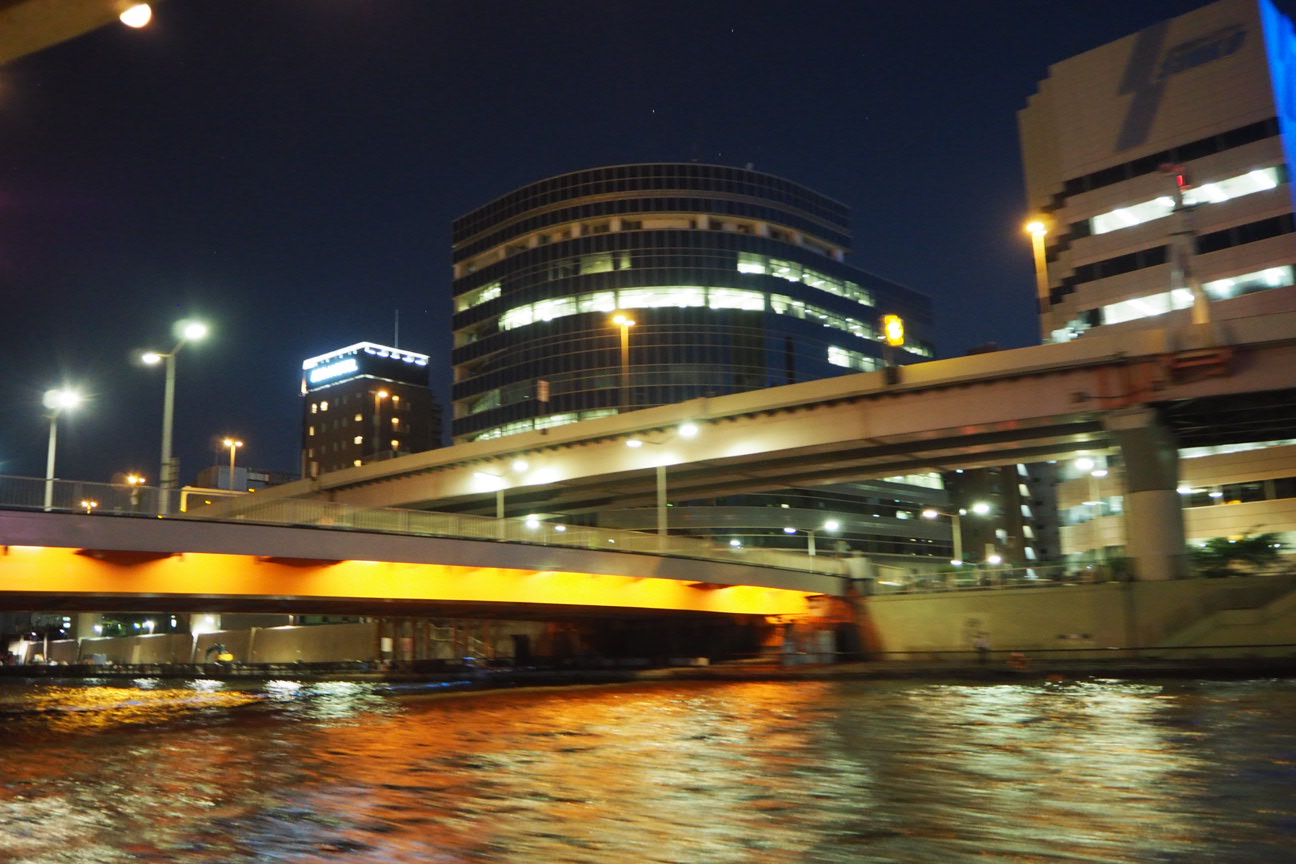
We don't like extreme heat so, deciding that Singapore, Kuala Lumpur or Bangkok would probably be too warm, we opted for Tokyo.  We left Heathrow on August 29th (bank holiday Monday in the UK), flew overnight (and over Norwich!), and spent three nights in Tokyo.  As identified by several readers, picture 5 does indeed show Tokyo - the Sky Tower on the left, and the Asahi Beer HQ across the river from the Asakusa landing for the Tokyo River Cruises.


As you can see it was clear blue skies and our plans went awry at the first hurdle as the temperature climbed to 33C or more!   We weren't brave enough to try the trains or buses on this short visit and took the boat from Takeshiba to Asakusa where we guided ourselves to the Senso-Ji temple.  Due to high tides we could not return on the boat we had planned to, and so our return journey was through Tokyo at night.

We thoroughly enjoyed our brief stay in Japan and we hope to return to see more of the country.

The next long flight was to Auckland.  Neither of us slept well on the aircraft so we were pleased not to have hired a car from the airport to start our tour immediately.

We used Top 10 Holiday Parks and pre-booked out first stop at Kauri Coast (Kaihu).  After a couple of nights there we headed to Russell on the Bay of Islands.  Picture 9 is taken from Flagstaff Hill on the Russell side of the bay, and shows the Waitangi Treaty Grounds, as correctly identified by a few readers.

At Russell I reset the options on the GPS: from Kawakawa we should have gone to Opua and across the ferry to Okiato, but the device led us on an interesting journey via Waikare Road and Russell-Whakapara Road.  Those who know the area will appreciate that this was our first experience of New Zealand's unsealed roads - what fun! 

For our next stop we headed beyond Auckland.  We were aiming for Coromandel but most of the sites were booked up for Friday night so we ended up in the backwater of Orere Point.

Then we headed down the coast of the Firth of Thames, past Tauranga to Rotorua from where we visited some of the thermal lake areas, and the Buried Village. We took a stroll around the town, and I found a collectable shop with some postal history and couldn't deny myself the opportunity!  One walk took us to the former bath house which is now the Rotorua Museum, as shown in picture 4. 

After a few days we headed on to Gisborne, via Whatakane and Matawai using the Waioeka Gorge.  Good job we didn't have to ask how to pronounce some of these names - four vowels in a row!  At Gisborne we were close to the beach and quickly went for a walk before the evening light faded.  In a nearby park was the statue of Captain James Cook shown in picture 13, again correctly identified by some readers. 

Our next stop after Gisborne was a few days at Hastings on Hawke's Bay, which included visits to Napier and Havelock North.  Picture 14 is on the second storey of the Art Deco Centre - and also on one of Universal Mail's stamps, sold only at the Napier I-Site (information centre).  Highlight, though, was the Gannet Colony at Cape Kidnappers - but I could bore you with hundreds of pictures of birds, so I'll post them on flickr later.  Meanwhile here's a link to one on Photobucket.

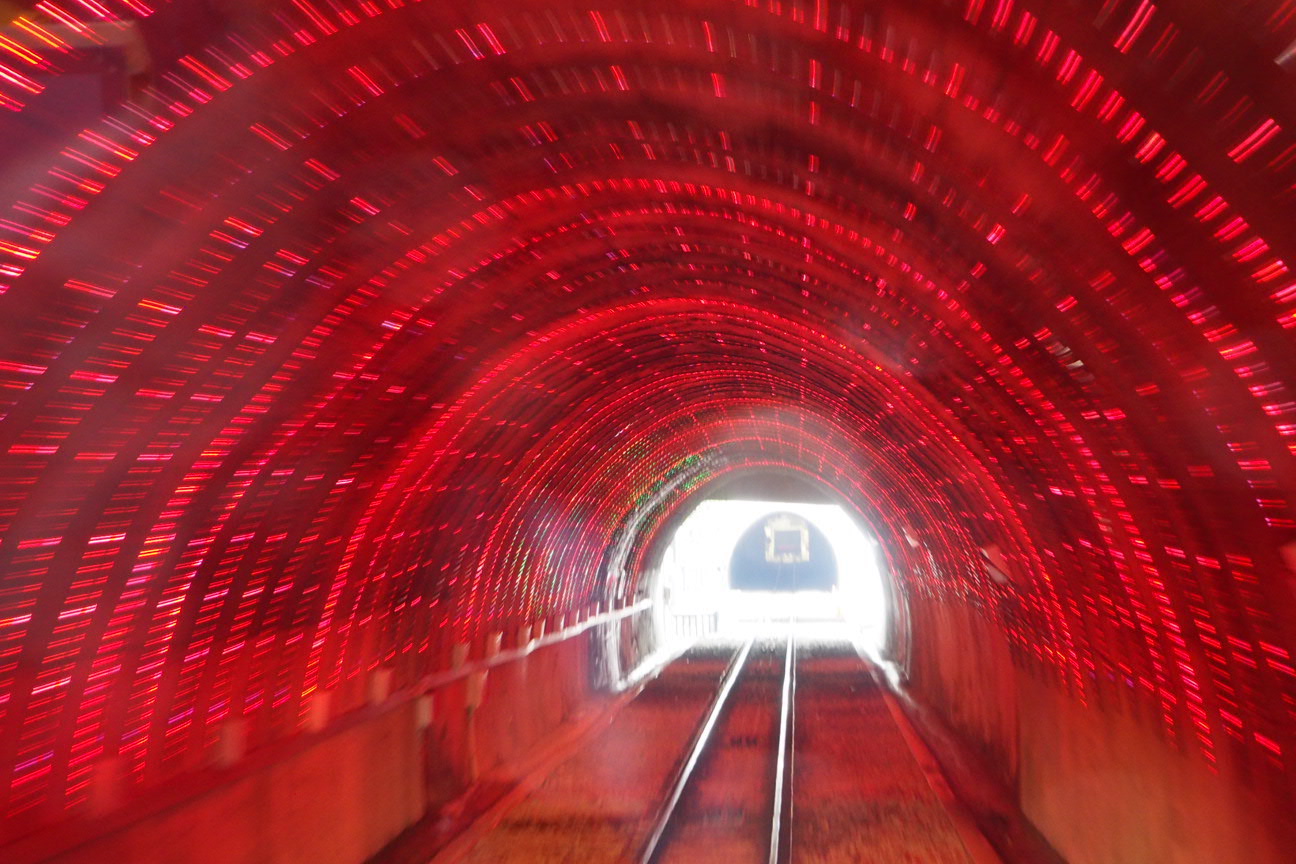
While planning our route through North Island there was always a problem in deciding where to go and where to leave out.  It would have been good to go to Taranaki, but that is right over on the west, and we hadn't even done the whole of the East Cape area.  With an Interisland crossing booked for 27 September we went west to Whanganui before heading down to Wellington.  Picture number 1 is indeed at Whanganui, this stainless steel globe sculpture by David McCracken on the riverside is here viewed with a long lens from the top of the Elevator at Durie Hill.  And picture 2 is the Wellington Cable Car tunnel, which took us from the huge Botanical Gardens to the downtown area - and Wellington is so much more appealing than Auckland.


And so to South Island!  Of course the first stop was Picton as that is the Interislander ferry terminal.  And picture number 15 (below left) is one of the more difficult ones in the quiz.  Pita Rua carved the whale into a tree using his chainsaw.  St Joseph's Church is in the background.  While at Picton we had a short excursion to Havelock (yes, the original one), along Queen Charlotte Drive.


As the sea forecast was poor we headed west to Greymouth instead of taking a whale-spotting tour from Kaikoura, a place many of you will have heard about recently.  The Greymouth site was right next to the beach - and the airfield (where no permission is required to land), and the railway.

The west coast highway was far easier than I had expected, and we headed south through Hokitika to Franz Josef and a trek to the glacier, or as close to it as we could get. Seeing an ice cave alongside the track did make us wonder how much of the 'rock' we were walking on and round was actually ice.  But the weather was better on the day we left, and we took the opportunity to drive to the Fox Glacier viewpoint and this provides picture number 17, another long-lens shot (above right).


Another pre-booked stop was at Te Anau for the Milford Sound excursion so we headed down to the Haast Pass, and on to Wanaka, by-passing Queenstown which is said to be almost as expensive as Auckland!  Picture 18 is indeed the village of Milford Sound from the boat.   We were blessed with excellent weather at Wanaka, Te Anau and Milford (named after Milford Haven).  Another off-road highlight was from Wanaka to the start of the Rob Roy track - a mostly unsealed road, with 9 fords!

From Te Anau we headed to Dunedin, including driving the Presidential Highway.  What?, you say, New Zealand doesn't have a president!  No, but it does have a 44km road which runs between the towns of Clinton and Gore!   After Dunedin we headed to Christchurch for our flight to Auckland, and then out of New Zealand.  Pictures 16 and 6 were correctly identified as Dunedin Railway Station and the Re:Start Mall in Christchurch, the latter made from containers while the city is rebuilt after the 2011 earthquake which toppled the cathedral spire and resulted in most of the central city blocks bearing the red and white logo of Wilson's car-parks.  The devastation which is still evident was very sobering.


Our air ticket was designed as 'round-the-world' requiring us to continue in an easterly direction.  Val had wanted to visit San Francisco while I had a liking for New Orleans, so we flew from Auckland to San Francisco, staying for a few days and seeing the Japanese Garden in Golden Gate Park (picture number 3).   Although we were losing hours with every eastward trip, we gained an extra October 15th, checking into our SF hotel at an earlier local clock time than our flight from Christchurch, on the same day.

Rather than drive to New Orleans - or fly direct - we decided to take the train, specifically the Sunset Limited from Los Angeles which left LA at around 10pm on the Wednesday and scheduled to arrive in NO just before 10pm on Friday.  Of course we missed southern California (it being dark), and a further stretch, but there was plenty to see during daylight hours including El Paso Amtrak Station - picture 7.  This is much more impressive than, for example, the station at Houston Texas which is more like a couple of portacabins.


We had a great time in and around New Orleans including the Steamboat trip and a visit to the alligator swamps, and of course, street jazz, bar jazz, and excellent food.  Cutting a long journey short for the purposes of this narrative, picture number 11 is indeed Jackson Square with St Louis Cathedral in the background as identified by a number of readers.   New Orleans is another place added to the 'must go back' list, but maybe not San Francisco.

As we had relatives in Halifax NS we paid them a visit coinciding with Halloween, needing two flights, via Newark NJ.  While in (largely sunny) Nova Scotia we visited Lunenburg, the colourful subject of picture number 10.  We hired another car to drive down to Boston as our ticket package didn't allow a return flight from Halifax (only JFK, Washington or Boston - or Vancouver).   On the way through New Brunswick we had to visit a third Havelock just to get off the fairly tedious highway - nothing to see but trees, not even much traffic.  In New England we passed through the deprived areas of rural Maine, and through and around the White Mountains of New Hampshire, and the famous Bretton Woods Mount Washington hotel. - picture number 12.


We couldn't see Mount Washington - New Hampshire was largely cloudy and wet.   But Boston - where we had an afternoon and much of the next day to wander - was sunny and bright, and we enjoyed our last day.  On the opposite side of the bay to the city is Boston Logan Airport with - as one person identified - the Hyatt Hotel on the left with the control tower behind (picture 8).


We landed at Heathrow at 9am on November 6th, breezed through the formalities and met our taxi driver by 9.30.  He had us back in Dereham in not much more than a couple of hours, and it was all over!

Thanks to everybody who took an interest.  I'll check out the replies and contact the prize winners before the end of the week.

          OK, so that promise didn't work, and it won't happen before Christmas now.  But when things have settled down, I'll get back to you.