Showing posts with label privatisation. Show all posts

Wednesday, 11 December 2013

Canada Post drops a bombshell with huge stamp price rise.

Ever since the part-privatisation of Royal Mail, there has been speculation concerning the continued validity of stamps with values expressed as a service, rather than a monetary value - 1st, 2nd, Special Delivery, etc.

In January TNT Dutch Post announced that all Guilder-valued stamps would be invalidated from 1 November, with no option of exchanging them for Euro-valued stamps which have been in use since 2002.  A court case ensued brought by the Dutch Stamp Dealers Association, during which the TNT lawyer casually mentioned that Euro-valued stamps would cease to be valid also - that means all stamps issued from mid 2001 to mid 2010!

Since mid 2010 the stamps have a rate indicator instead of a value, like '1' for inland mail up to 20 gr.


Now Canada Post has stunned collectors and dealers alike by announcing a new basis of stamp sales.  Their current inland letter rate - served by stamps denominated 'P' for permanent (what a joke!) - is 63c.

"A new approach to pricing Lettermail to take effect March 31, 2014
Canada Post will introduce a new tiered pricing structure for Letter mail mailed within Canada, which will better reflect the cost of serving various customer segments. Under these changes, the majority of Canadians, because they buy stamps in booklets or coils, will pay $0.85 per stamp, with discounts for customers that use the mail most. 


The minority of consumers who purchase stamps one at a time, which represents an estimated 2 per cent of stamp purchases, will pay $1 per stamp. The average Canadian household purchases fewer than 2 stamps per month. These stamp price changes will take effect March 31, 2014."

But not only will the price increase by 35% (59% if you buy just one stamp), but all 'P' rate stamps have been summarily removed from sale at Post Offices and the Philatelic Bureau, including those in quarterly packs which collectors often don't buy as soon as they are issued.

All the POs  were told by e-mail to remove all the "P" stamps from sale. If they sell any "P" stamps and Canada Post finds out, they will face repercussions. The only stamps that are now sold at POs are stamps with the 63¢ value on them.  This explains why the Christmas stamps are denominated at 63c instead of 'P'.

The rate increase still requires Parliament's approval, as Canada Post is only approved to raise the rate 2 cents per year until 2015, but with a new business plan presented there may be little option.  According to Canada Post:

5,094,694 people get door to door delivery in Canada.
Average cost per address is $269.
3,804, 574 get mail through group mail boxes.
Average cost per box is $117.

So they are also proposing to end door to door delivery to urban addresses.

Note though, that just as Royal Mail said that the average UK household only spent 50p a week on stamps (before the 2012 rise), Canada Post reckons their citizens buy fewer than 2 stamps a month on average.


Wednesday, 4 July 2012

Delivered by Royal Mail - from Bristol ink-jet (and updated to show others)

Here's the first image we have been sent showing the new 'attachment' to the traditional inkjet postmark.  (Thanks to John P).


The original story is here.

UPDATE: Some more, including one from Chester only partially bilingual - I wonder if this will change?   Also two covers from Bath Bristol Taunton, the 2nd class one showing what happens if there is no slogan - uncancelled stamp! Note these have 7 wavy lines.


-----
Swindon also not yet using Delivered by slogan (thanks Rob) - this one with 9 wavy lines:


Friday, 15 June 2012

Delivered by Royal Mail

A couple of weeks ago I mentioned the plan by Royal Mail to remind householders just who delivers their mail, by the incorporation of a new slogan alongside the postage paid indicator (PPI).

It seems that Argos have been very quick off the mark and are already using the new-style PPI as shown below.  Thanks to Dominic for this picture, received today.


UPDATE 6 July:

Three different examples seen today.  The 1st and 2nd from with License number COVENTRY 909 are from the same mailing house for different customers.  I though the square design had been abandoned by Royal Mail some time ago, but here it is with yet another Coventry license CV24385


Despite the fact that we are still waiting for the Charles Dickens stamps due next Tuesday, we are closing the office until the beginning of July to take a well-earned rest and recharge the batteries.


Orders through our shop (www.norphil.co.uk/catalog) will be processed and stock reserved as usual.  There will be a special bonus for order number 2000.

And we may accidentally see emails while I'm using the iPhone looking for ideal places to rest and eat.  Enjoy the summer and the rest of Euro2012 !


Wednesday, 28 March 2012

Post Office Ltd instruct withdrawal of all Large Letter Jubilee stamps on the day after 'issue'

Further to our encouraging message on Monday regarding the release of the Large Letter Diamond Jubilee Machin Definitive Stamps we understand that Post Office branches were instructed today to remove from sale all Large Letter Diamond Jubilee stamps!

However given that many branches have no 1st gold Large Letter stamps - and I'm told that some at least had a similar message last week(!) - it seems unlikely that they will comply as to do so would mean that they were unable to sell those stamps to customers.  If stocks of the gold stamps are available at the stores in Swindon, it shows an alarming ineptitude in stock control.

Despite the clear authorisation by Post Office Ltd two days ago, Royal Mail are suggesting that the current sales are unauthorised.   If this is the degree of co-operation when both are part of one business, what level of co-operation will there be when Royal Mail is privatised?

PS: At the time of writing, Royal Mail say that the 1st class Large Jubilee stamps will be on the same first day cover as the new airmail tariff stamps (87p, £1.28 and £1.90) dated 25 April 2012.

Update 16:46 28 March on twitter: "Hi Ian, we are still selling the Large Letter Diamond Jubilee stamps."

Monday, 23 January 2012

Postage rates to rise - when, by how much, and why?

We all know that postage rates rise every year, and that this inevitably has an effect on the cost - and indeed the very continuance of - of our collections.  There has been much written in the mainstream press in recent days about the fact that "second class post will rise to 55p", but the speculation inevitably masks the full story.
(Royal Mail) said it is hoping to increase second class stamps by 53 per cent from 36p to 55p, and insisted that the increase was still “affordable” for “vulnerable groups”.
The price of second class stamps would then rise further by inflation every year for seven years. There would be no limit on the price of a first class stamp, which currently costs 46p. 

Ofcom, the new postal regulator, published proposals in October 2011 "designed to ensure that UK consumers continue to benefit from a universally-priced, affordable postal service, six days a week. 
"The central aim of the proposals is to make what is known as the Universal Service Obligation (USO) placed on Royal Mail financially sustainable. Without regulatory changes there is a risk that Royal Mail may not be able to continue to deliver the USO to the same standard.
"Ofcom therefore proposes to give Royal Mail freedom to set its own prices for the majority of its products including:
  • First Class deliveries – letters, large letters (A4 in size and up to 750g in weight) and parcels;
  • Second Class deliveries – for large letters and parcels up to 1Kg in weight;
  • standard parcels;
  • business mail – metered or franked mail and pre-printed envelopes; and
  • bulk mail – mainly large businesses sending a large volume of post in a single mailing for example, bank statements.
"Ofcom proposes to put a price cap of between 45p and 55p on Second Class stamps for standard letters to protect vulnerable customers from significant price rises. The cap would be indexed in line with inflation."

But why is there a risk that Royal Mail may not be able to continue to deliver the USO to the same standard" ?   The answer lies in the meat of the Consultation Paper


"1.21 There is widespread recognition that the approach to regulation adopted in the past, has failed in the face of the particular circumstances affecting this sector. 
1.22 To date, the approach adopted has been based on price controls - similar to those used in most other utility sectors. In normal circumstances this approach is an effective means of preventing private operators from earning excessive profits, thereby providing incentives for firms to reduce costs, while at the same time protecting consumers from excessive prices. It is an approach that is widely used by regulators, including Ofcom, to regulate private operators with significant market power. 
1.23 The recent experience of postal regulation, however, has demonstrated all the weaknesses of price controls with none of the benefits. In a highly uncertain market, price controls have removed the flexibility that would allow Royal Mail to adjust to changes in demand, while at the same time Royal Mail has been unable to improve efficiency, either at the rate expected by the regulator when the price control was set, or at the rate set by its own internal targets at the time. 
1.24 Furthermore, price controls on Royal Mail have served less and less to protect customers from price rises. Since 2006 Royal Mail's financial position has led it to apply to the regulator for price rises over and above those consistent with the regulatory formula. In November 2010 Royal Mail applied to Postcomm for additional flexibility to increase prices, resulting in price rises averaging 12% for 2011-12. In the light of its primary duty towards the universal service, Postcomm granted these applications. 
1.25 We therefore consider that price controls in this sector have failed in recent years. The reasons for this are clear. First, in a highly uncertain market environment, where the level and pattern of demand is so unclear, it is not feasible to expect to predict accurately whether a given price trajectory is sufficient to allow the universal service to be financed. If the price control that is set turns out to be to be too tight, it will not allow for the universal service to be financed. If, on the other hand, it is set too loosely, it will provide little protection and inadequate efficiency incentives."

Both Ofcom papers are very interesting reads.  They demonstrate that the competition faced by Royal Mail is not, as is common in some European countries, end-to-end competition.  Competition in the UK is based on access by other operators to Royal Mail's delivery network.  Ofcom therefore proposes
  • imposing an access condition on Royal Mail to oblige it to grant access at inward mail centres;
  • not to regulate the price of access, to enable Royal Mail to set prices in a way that covers the costs of the network; and
  • ensuring, by means of a 'margin squeeze test', that the difference between the access price and retail price is kept at a level that allows efficient access competitors to compete effectively.
Royal Mail has repeatedly indicated that downstream access costs money because of controls on the price they can charge.  Removal of this control should help restore the letters and packets postal service to profitability.

We'll be interested to see how things develop and at what level the new prices will be set.  As the Ofcom report will not be published until early February it is quite likely that this year's price rise will not take place at the end of March as usual, and early May seems more likely.

Thursday, 9 June 2011

Mail Competition: and does Royal Mail get anything for it?

Most people are aware that the UK mail processing industry has been opened up to competition.  A number of private companies handle business mail, passing it over to Royal Mail for the 'final mile' delivery - what is known as downstream access.

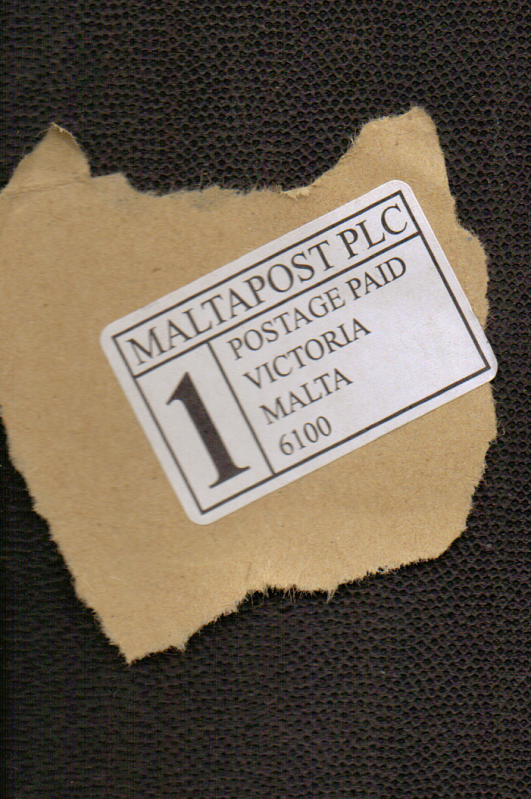
All this is carefully regulated and the amount that RM can charge to competitors is controlled by the mail regulator - so much for free and fair competition!  Here is an example of a Postage Paid Impression or Postage Paid Indicator from Victoria, Malta.  One would not expect that Royal Mail receives anything for handling this item of mail - it is simply incoming overseas mail.


What makes this interesting is that the item was from a UK Government Department: I'm guessing that they outsourced/off-shored the processing and production of the contents which were then mailed in from Malta.  I'm trying to find out which arm of government was responsible for this money-saving exercise which hasn't even provided income for RM's UK-based competitors, apparently!