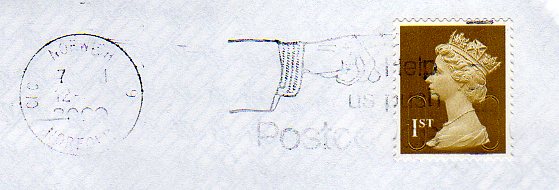
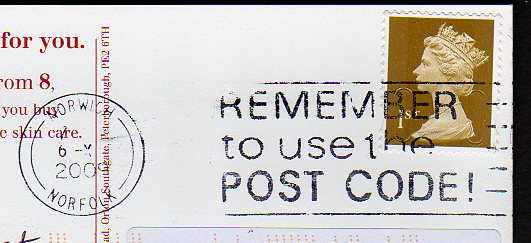
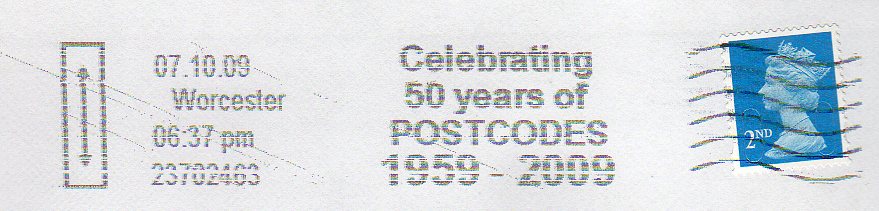
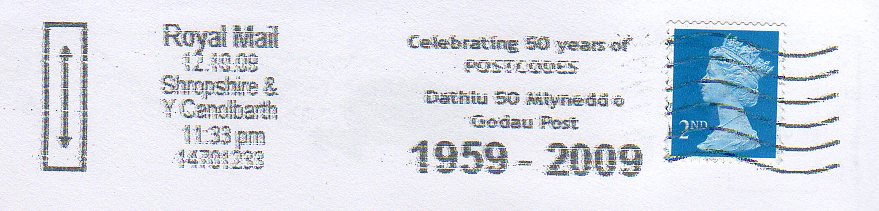
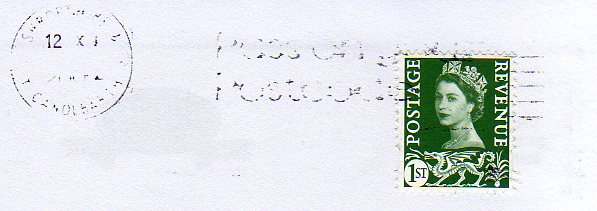
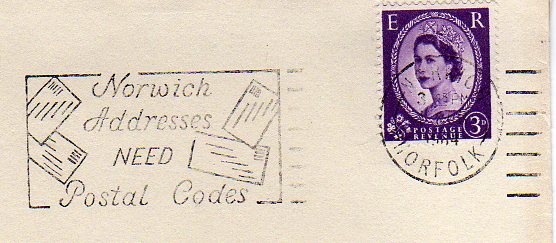
There are some aspects of British 20th century postmarks and postal markings which puzzle collectors in modern times, although when they occurred the purpose or reason was widely known.
These questions are often asked on philatelic forums but not everybody is happy to venture into forums for the first time so if you have a postal marking that puzzles you, please email me, with a picture, and I'll try to answer it here. These will not be in-depth studies and I may gloss over some aspects, but I'm sure knowledgeable readers will put me right on any errors.
Red postmarks
In the 19th century before postal reform it was common for letters to be sent unpaid, with the recipient being responsible for paying the letter carrier. Most postal marks were applied in black, although other colours (blue, blue-green, blue-black, yellow) are known but the passage of time has changed some of these colours. (See also British Postal History pages of E & R Shanahan's website - and explore the rest of it for some fascinating articles!)
If a letter was prepaid, it was marked in red. With the Uniform Fourpenny Post this could be manuscript '4 pd', or just a red 4. The same applied with the Penny Post. When the Penny Black stamp was issued the Maltese Cross postmark was applied in red indicating a paid letter. But as we know the stamp was soon reissued in red-brown and black postmarks were used. (For much more detail on postmarks of the British Isles from 1840-76 see the GBPS website.)
Through the 20th century black ink was used to cancel stamps, but for bulk postings when postage was paid for on account or in cash, the letters (etc) received a PAID handstamp or machine mark and this was in red (though there are some exceptions where the PAID handstamp was used to cancel a stamp which had missed regular postmarking. This was replicated with franking machines (or meters) which were also applied in red until recently.
As with anything there are exceptions. When Royal Mail marked the 150th anniversary of the 1d black stamp in 1990 with the double-headed 'Victoria/Machin' set, the ink colour was changed to red so that it could be seen on the 1st class and 20p stamps. Which answers one question sent this week.

What time is it?
Why does the postmark on the 1st class stamp show the time (3.30PM) while that on the 2nd class (15p) stamp does not?
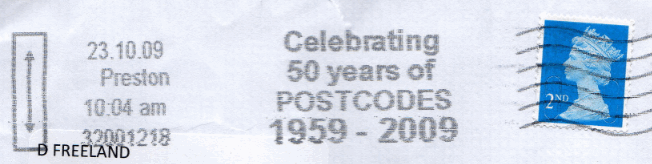
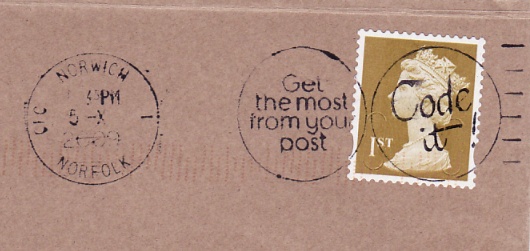
The answer to this lies in the posting/delivery promise, that a high percentage of 1st class post would be delivered the next day. The time it was postmarked reflect the time it was collected from the postbox or post office. Although most letters posted late in the day with, say, a 7.30PM postmark would be delivered next day it might the by the second delivery, or on the third day if in a remote location, the delay being explained by the time of posting/processing.
There was less urgency with 2nd class post and so the time was not shown. The reason for this is so that 2nd class mail could be processed over a long period some time after posting. It may be sorted in the early hours of day 2, in which case it would logically receive (say) a 4.00 AM postmark but for the day following posting. This would cause confusion with recipients when the sender was pressed for which day the letter was posted, hence it received a postmark with the date of posting but no time.
Why are there blue dots on my stamp?


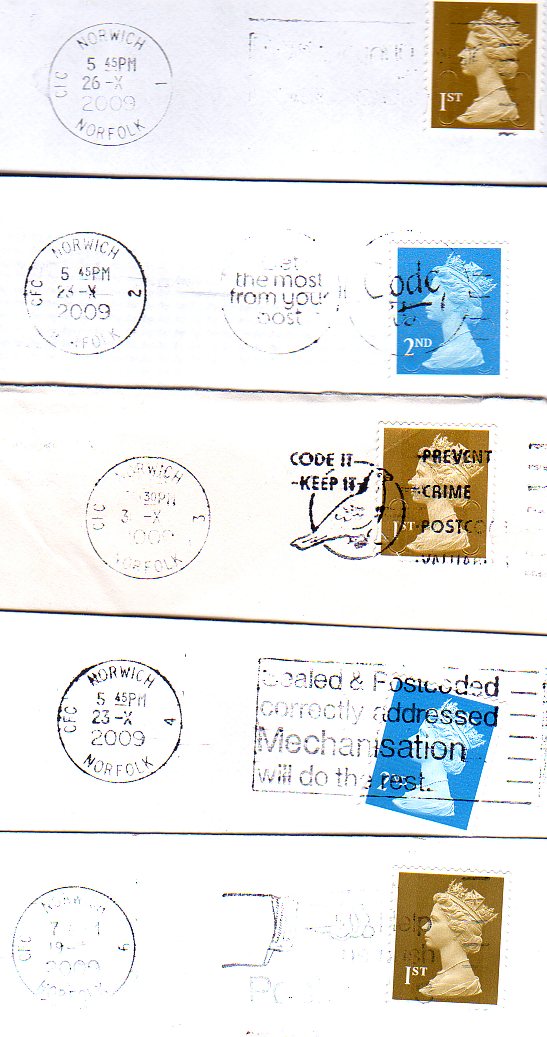
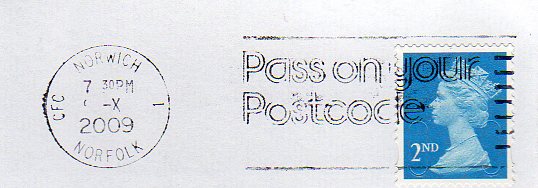
These pale blue or white opaque phosphorised dots are part of the address coding to enable mechanised sorting of the mail. Previously they were transparent or white (and waxy), and later they were replaced with red or red-orange bar-codes as shown below. They are not uncommon, although most collectors prefer used stamps with postmarks and without these mechanised sorting marks.

These questions are often asked on philatelic forums but not everybody is happy to venture into forums for the first time so if you have a postal marking that puzzles you, please email me, with a picture, and I'll try to answer it here. These will not be in-depth studies and I may gloss over some aspects, but I'm sure knowledgeable readers will put me right on any errors.
Red postmarks
In the 19th century before postal reform it was common for letters to be sent unpaid, with the recipient being responsible for paying the letter carrier. Most postal marks were applied in black, although other colours (blue, blue-green, blue-black, yellow) are known but the passage of time has changed some of these colours. (See also British Postal History pages of E & R Shanahan's website - and explore the rest of it for some fascinating articles!)
If a letter was prepaid, it was marked in red. With the Uniform Fourpenny Post this could be manuscript '4 pd', or just a red 4. The same applied with the Penny Post. When the Penny Black stamp was issued the Maltese Cross postmark was applied in red indicating a paid letter. But as we know the stamp was soon reissued in red-brown and black postmarks were used. (For much more detail on postmarks of the British Isles from 1840-76 see the GBPS website.)
Through the 20th century black ink was used to cancel stamps, but for bulk postings when postage was paid for on account or in cash, the letters (etc) received a PAID handstamp or machine mark and this was in red (though there are some exceptions where the PAID handstamp was used to cancel a stamp which had missed regular postmarking. This was replicated with franking machines (or meters) which were also applied in red until recently.
As with anything there are exceptions. When Royal Mail marked the 150th anniversary of the 1d black stamp in 1990 with the double-headed 'Victoria/Machin' set, the ink colour was changed to red so that it could be seen on the 1st class and 20p stamps. Which answers one question sent this week.

What time is it?
Why does the postmark on the 1st class stamp show the time (3.30PM) while that on the 2nd class (15p) stamp does not?
The answer to this lies in the posting/delivery promise, that a high percentage of 1st class post would be delivered the next day. The time it was postmarked reflect the time it was collected from the postbox or post office. Although most letters posted late in the day with, say, a 7.30PM postmark would be delivered next day it might the by the second delivery, or on the third day if in a remote location, the delay being explained by the time of posting/processing.
There was less urgency with 2nd class post and so the time was not shown. The reason for this is so that 2nd class mail could be processed over a long period some time after posting. It may be sorted in the early hours of day 2, in which case it would logically receive (say) a 4.00 AM postmark but for the day following posting. This would cause confusion with recipients when the sender was pressed for which day the letter was posted, hence it received a postmark with the date of posting but no time.
Why are there blue dots on my stamp?
These pale blue or white opaque phosphorised dots are part of the address coding to enable mechanised sorting of the mail. Previously they were transparent or white (and waxy), and later they were replaced with red or red-orange bar-codes as shown below. They are not uncommon, although most collectors prefer used stamps with postmarks and without these mechanised sorting marks.
That's all for now - any supplementary questions will be answered here, but new questions will be on a separate post.